
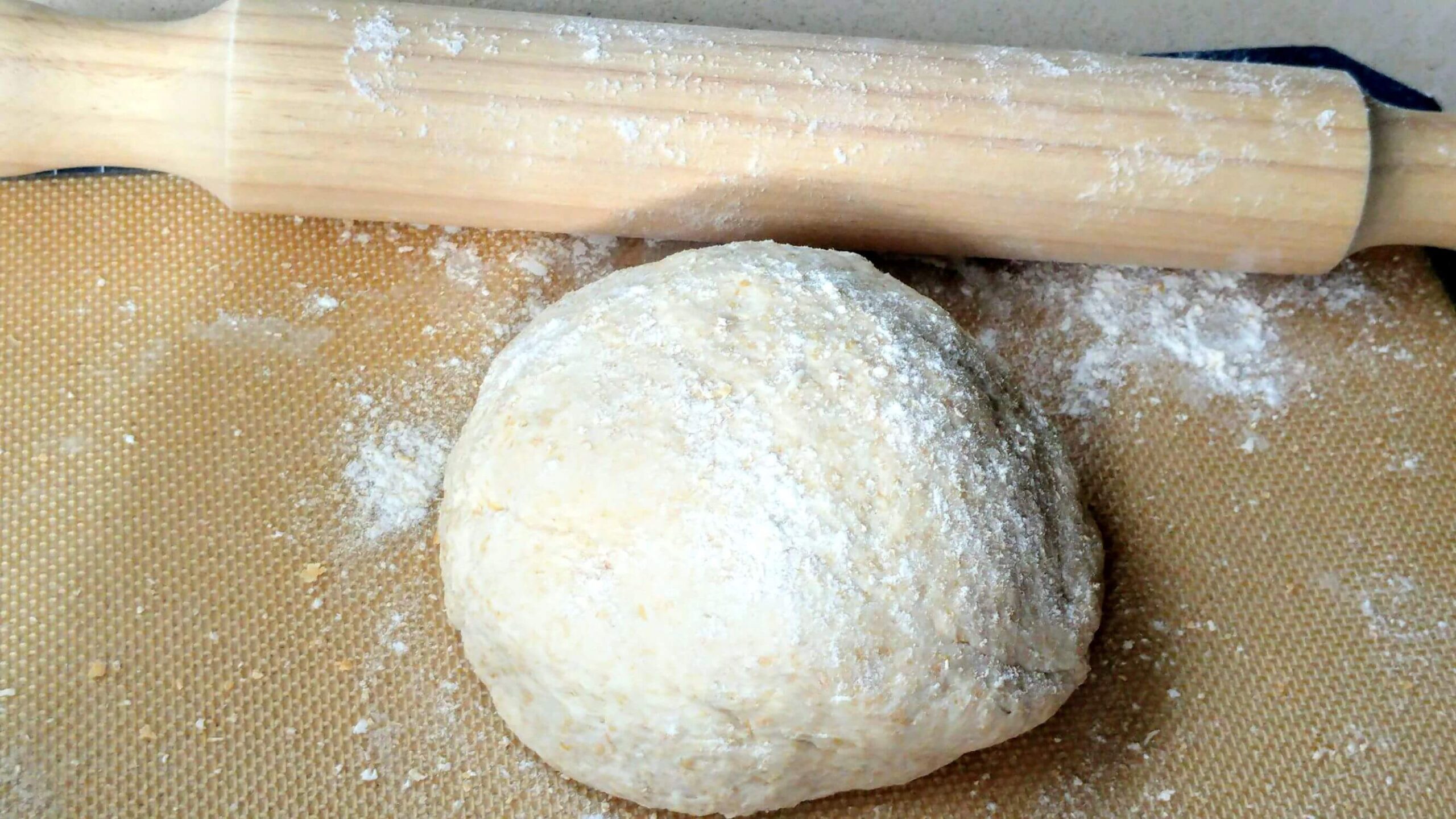
This is one of the most useful recipes to have on hand. A dough that comes together in less than 10 minutes and needs no yeast. It’s a simple base that pleases even the fussiest of eaters. Whether the goal is savoury pizza scrolls, a quick pizza base, or sweet cinnamon and apple scrolls, this two-ingredient dough recipe covers all the bases — and all it takes is 2 basic ingredients.
It’s an easy dough recipe for kids’ lunchboxes: quick enough for a weeknight, simple enough for little hands to help with, and versatile enough to go sweet or savoury.
What You Need for Two-Ingredient Dough
- Self-raising wholemeal (wholewheat) flour – Plain (all-purpose) self-raising flour yields a lighter and fluffier scroll than self-raising wholemeal flour, but wholemeal is more nutrient-dense than plain self-raising flour. Half plain and half wholemeal self-raising flour also works well as a middle ground.
- Greek yoghurt – Greek yoghurt is ideal for this recipe because its thick consistency holds the dough together without making it too wet or sticky. Use full-fat, low-fat or non-fat — any will work, though thicker yoghurt gives the most reliable results. Just make sure it’s plain and not too runny.
How to Make Two-Ingredient Dough
This recipe comes together quickly.
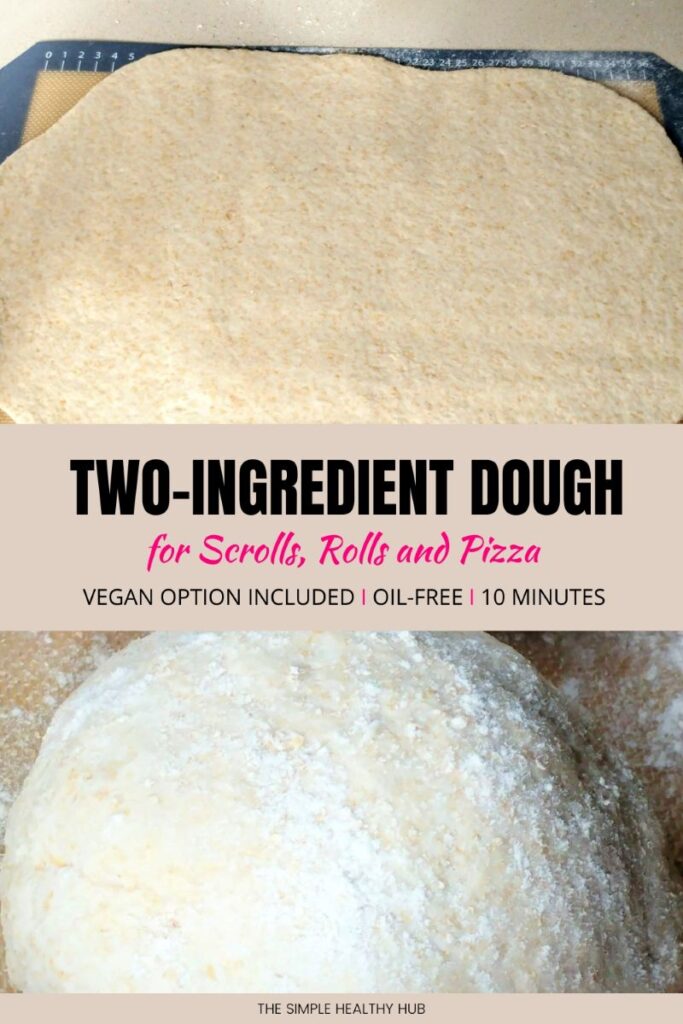
- Combine the self-raising wholemeal flour with the Greek yoghurt and gently mix until it forms a ball. If the dough is too dry, add a little more yoghurt; if it’s too wet and sticky, add a little more flour. Once a ball starts to form, turn the dough onto a floured board and knead for a couple of minutes.
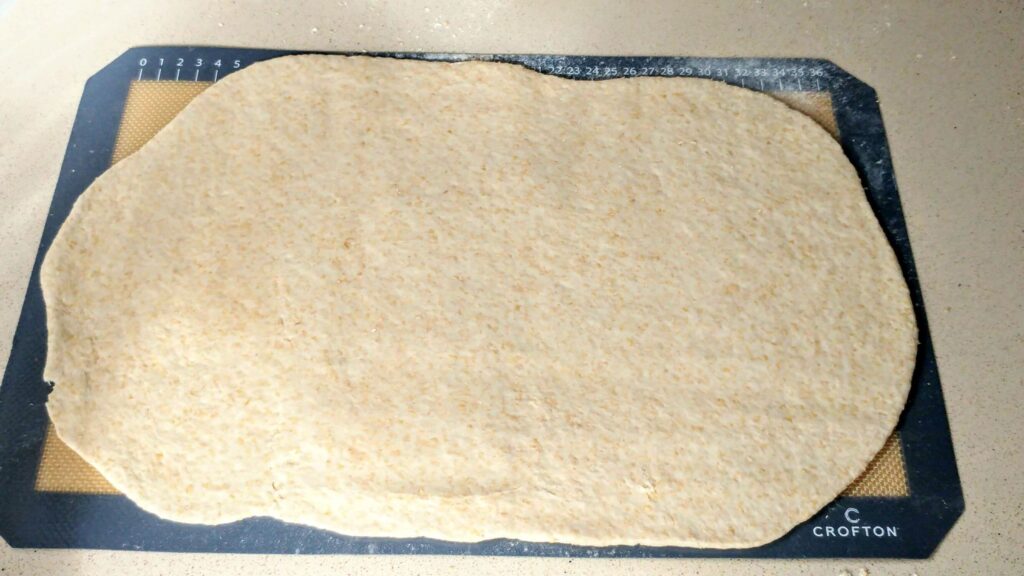
- Once kneaded, sprinkle a little more flour onto the board and rolling pin. Roll the dough out into a rectangle just under 1cm thick.
- Once the base is rolled out, add the filling of choice, sweet or savoury.
Filling Ideas for Pizza Scrolls
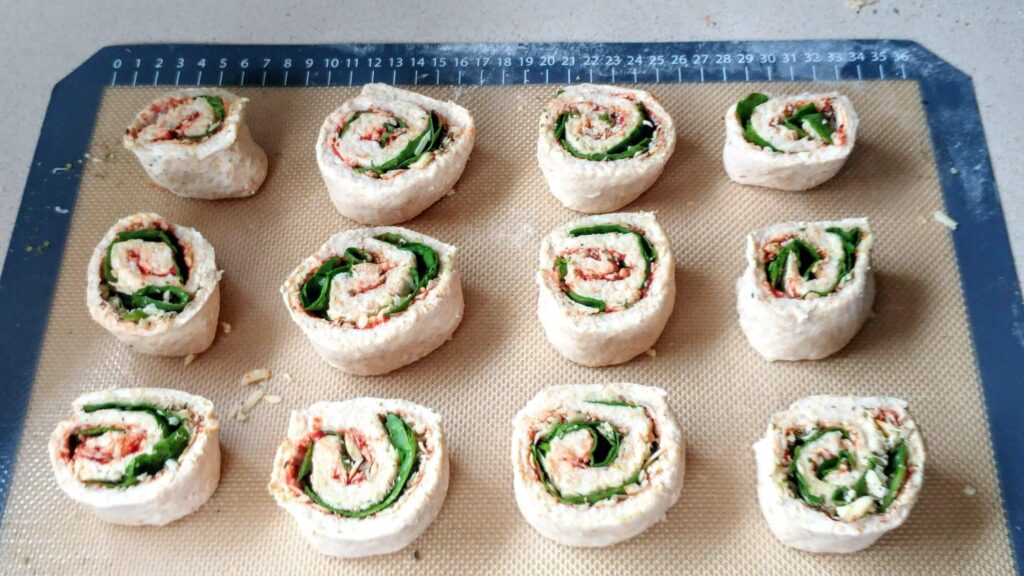
A classic combination is a spread of tomato paste, followed by grated cheddar cheese and a sprinkling of spinach leaves.
Leave a 2cm gap free of toppings at the top edge, otherwise the filling will ooze out when the dough is rolled up. Once the fillings are added, roll up the dough starting from the long side. Cut into 2cm (approximately 1 inch) scrolls and place flat on a baking tray lined with baking paper.
Other filling combinations to try:
- Fried leek and cheese
- Grated apple, cinnamon and coconut sugar (or maple syrup)
- Blueberry, cinnamon and coconut sugar
- Jam and sultana
- Vegemite and cheese
- Spinach and ricotta
- Mashed pumpkin and cheese
- Ham, cheese and pineapple
- Basil pesto, sundried tomato and mozzarella
Tips for the Best Two-Ingredient Dough
- Split the dough in half and use one half for a sweet filling, the other for savoury, to get variety from one batch.
- Use the dough as a pizza base instead of scrolls when short on time.
- Wholemeal flour absorbs more liquid than plain flour, so it needs more yoghurt. Adjust gradually.
- If the dough feels too sticky, add extra flour a tablespoon at a time rather than all at once, so the dough doesn’t become tough.
- Let the scrolls cool for a few minutes before serving; this helps the filling set slightly so it doesn’t spill out.
Ingredient Substitutions
- Coconut yoghurt instead of Greek yoghurt – Coconut yoghurt is a suitable dairy-free, vegan swap and is commonly used in two-ingredient dough recipes. However, it’s naturally thinner and more watery than Greek yoghurt, which tends to produce a stickier dough. Add extra flour, a tablespoon at a time, until the dough holds together and no longer sticks to the hands. Choose a plain (unflavoured) coconut yoghurt, not a coconut-flavoured dessert yoghurt, for the best texture.
- Plain (all-purpose) flour instead of self-raising flour – If self-raising flour isn’t available, plain flour can be used with baking powder added as the leavening agent. The standard ratio used across similar recipes is 2 teaspoons of baking powder per 1 cup of plain flour. This applies to both plain and wholemeal flour.
- Plain self-raising flour instead of wholemeal self-raising flour – Plain self-raising flour produces a lighter, fluffier result and requires slightly more flour relative to yoghurt than wholemeal. As a guide, use 2 cups of plain self-raising flour to 1 cup of Greek yoghurt, compared with 1½ cups of wholemeal self-raising flour to 1 cup of yoghurt. Wholemeal flour is more absorbent, so it needs comparatively less flour for the same amount of yoghurt.
- Gluten-free self-raising flour – Gluten-free flour blends generally need more liquid to form a cohesive dough. Expect to add extra yoghurt gradually beyond the standard quantity until the dough comes together; the exact amount will vary between gluten-free flour brands, so add it incrementally rather than all at once.
- Regular (non-Greek) plain yoghurt – Regular plain yoghurt is thinner than Greek yoghurt and contains more water. If using it, reduce the quantity slightly or compensate with a little extra flour to avoid a dough that’s too wet to handle.
Frequently Asked Questions
Can two-ingredient dough scrolls be frozen? Yes, baked scrolls freeze well for up to 3 months. Thaw and reheat in the oven or microwave.
What can be used instead of Greek yoghurt? Coconut yoghurt is a good dairy-free option, though it’s thinner and will need extra flour. Regular plain yoghurt also works but is watery, so slightly less yoghurt or a little extra flour helps balance the dough.
Can this dough be used as a pizza base? Yes — roll it out to the desired thickness, add toppings, and bake until golden for a quick homemade pizza.
Two-Ingredient Dough for Pizza Scrolls
Ingredients
Equipment
Method
- Preheat oven to 180°C / 350°F.
- Line a baking tray with baking paper.
- In a large mixing bowl, add the yoghurt and flour.
- Gently combine the two ingredients until a ball starts to form.
- Turn the dough onto a floured surface and knead for 2–3 minutes until smooth.
- Add extra flour to the surface and rolling pin, then roll the dough out into a rectangle just under 1cm thick.
- Add spreads and/or toppings to the base, leaving a 2cm gap at the top edge.
- Roll the dough up lengthways into a log.
- Cut into 2cm pieces and lay flat on the lined baking tray.
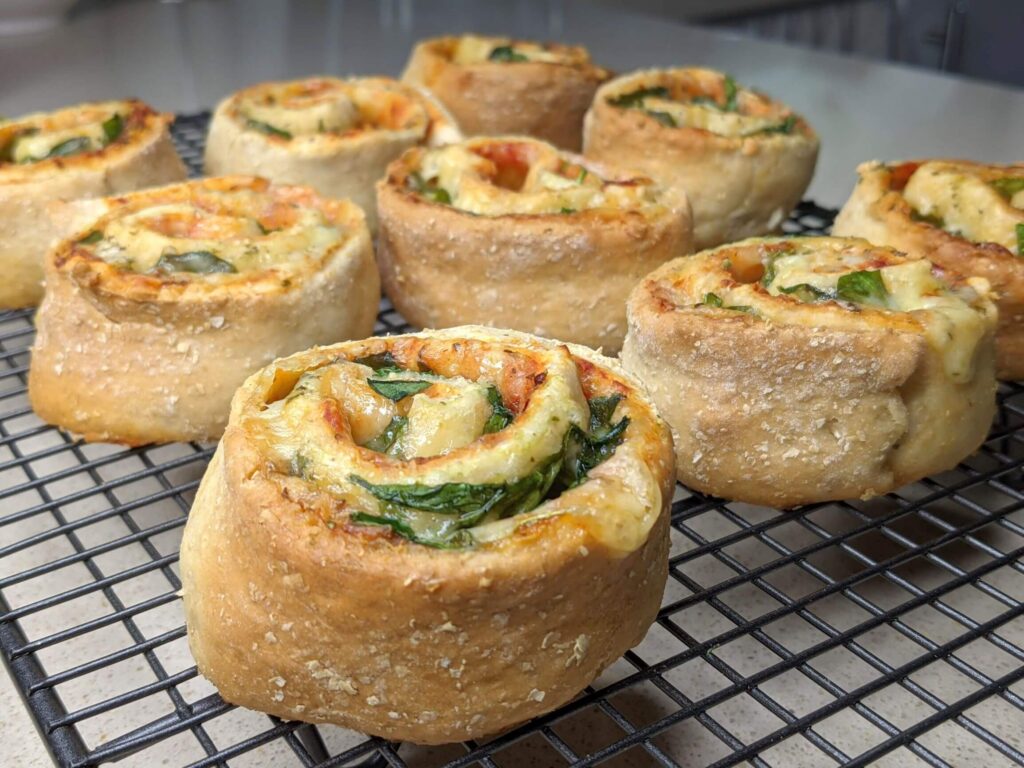
- Bake for 20 minutes, or until golden.
- Rest on a wire rack for a few minutes, then serve warm.
Notes
- If the dough is too sticky, add a tablespoon of flour at a time until it no longer sticks to the hands. If it’s too dry, add a tablespoon of yoghurt at a time until the right consistency is reached.
- Makes approximately 12 scrolls, or 1 large pizza base.
- Freezes well for up to 3 months — useful for meal-prepping lunchboxes.
- Ideal for school and work lunchboxes.
- If using self-raising plain flour instead of wholemeal, use 2 cups flour to 1 cup yoghurt.
- See the “Ingredient Substitutions” section of the post for coconut yoghurt, plain flour, and gluten-free swaps.
- Filling options:
- Tomato paste, cheddar cheese and spinach
- Fried leek and cheese
- Grated apple, cinnamon and coconut sugar (or maple syrup)
- Blueberry, cinnamon and coconut sugar
- Jam and sultana
- Vegemite and cheese
- Spinach and ricotta
- Mashed pumpkin and cheese
- Ham, cheese and pineapple
- Basil pesto, sundried tomato and mozzarella